New Blu-ray Disc

Blu-ray, also known as Blu-ray Disc (BD), is the name of a next-generation optical disc format jointly developed by the Blu-ray Disc Association (BDA), a group of the world's leading consumer electronics, personal computer and media manufacturers (including


Apple, Dell, Hitachi, HP, JVC, LG, Mitsubishi, Panasonic, Pioneer, Philips, Samsung, Sharp, Sony, TDK and Thomson). The format was developed to enable recording, rewriting and playback of high-definition video (HD), as well as storing large amounts of data. The format offers more than five times the storage capacity of traditional DVDs and can hold up to 25GB on a single-layer disc and 50GB on a dual-layer disc. This extra capacity combined with the use of advanced video and audio codecs will offer consumers an unprecedented HD experience.

While current optical disc technologies such as DVD, DVD±R, DVD±RW, and DVD-RAM rely on a red laser to read and write data, the new format uses a blue-violet laser instead, hence the name Blu-ray. Despite the different type of lasers used, Blu-ray products can easily be made backwards compatible with CDs and DVDs through the use of a BD/DVD/CD compatible optical pickup unit. The benefit of using a blue-violet laser (405nm) is that it has a shorter wavelength than a red laser (650nm), which makes it possible to focus the laser spot with even greater precision. This allows data to be packed more tightly and stored in less space, so it's possible to fit more data on the disc even though it's the same size as a CD/DVD. This together with the change of numerical aperture to 0.85 is what enables Blu-ray Discs to hold 25GB/50GB. Recent development by Pioneer has pushed the storage capacity to 500GB on a single disc by using 20 layers.

Blu-ray is currently supported by about 200 of the world's leading consumer electronics, personal computer, recording media, video game and music companies. The format also has support from all Hollywood studios and countless smaller studios as a successor to today's DVD format. Many studios have also announced that they will begin releasing new feature films on Blu-ray Disc day-and-date with DVD, as well as a continuous slate of catalog titles every month. For more information about Blu-ray movies, check out our Blu-ray movies and Blu-ray reviews section which offers information about new and upcoming Blu-ray releases, as well as what movies are currently available in the Blu-ray format.


For more information about Blu-ray, please see our Blu-ray FAQ.


Read More

The Plays of William Shakespeare

The plays written by the great Bard are listed below by category and alphabetical order. The section relating to the Chronology of Plays provides a list of when plays were written and published. This section provides access to the plot summary of each play, pictures, key dates, characters, history and the full script of every one of William Shakespeare's plays.

History themed Plays

 King Henry IV Part 1 - play by William Shakespeare
 King Henry IV Part 2 - a Shakespearean play
 King Henry V - play by William Shakespeare
 King Henry VI Part 1 - play by William Shakespeare
 King Henry VI Part 2 - a Shakespearean play
 King Henry VI Part 3 - a Shakespearean play
 King Henry VIII - play by William Shakespeare
 King John - play by William Shakespeare
 Richard II - play by William Shakespeare
 Richard III - play by William Shakespeare
Tragedy themed Plays

 Antony and Cleopatra - play by William Shakespeare
 Coriolanus - a Shakespearean play
 Hamlet - play by William Shakespeare
 Julius Caesar - play by William Shakespeare
 King Lear - play by William Shakespeare
 Macbeth - play by William Shakespeare
 Othello - play by William Shakespeare
 Romeo and Juliet - play by William Shakespeare
 Timon of Athens - a Shakespearean play
 Titus Andronicus - a Shakespearean play
Comedy themed Plays

 Alls Well That Ends Well - play by William Shakespeare
 As You Like It - play by William Shakespeare
 Comedy of Errors - play by William Shakespeare
 Cymbeline - a Shakespearean play
 Love's Labour's Lost - a Shakespearean play
 Measure for Measure - play by William Shakespeare
 Merchant of Venice - play by William Shakespeare
 Merry Wives of Windsor - play by William Shakespeare
 Midsummer Nights Dream - play by William Shakespeare
 Much Ado About Nothing - play by William Shakespeare
 Pericles, Prince of Tyre - a Shakespearean play
 Taming of the Shrew - play by William Shakespeare
 The Tempest - play by William Shakespeare
 Troilus and Cressida - a Shakespearean play
 Twelfth Night - play by William Shakespeare
 Two Gentlemen of Verona - a Shakespearean play
 Winter's Tale - a Shakespearean play
Registration of Plays
Plays were required to be registered prior to publication. It was important that plays were regulated as playwrights used the stage as a forum to express their own views on religion and politics. Registration provided an opportunity to invoke a form of censorship and the means to suppress too much freedom of thought and criticism of the crown and public affairs.

Information provided about the plays
The Bard never published any of his plays and therefore none of the original manuscripts have survived. Eighteen unauthorised versions of his plays were, however, published during his lifetime in quarto editions by unscrupulous publishers (there were no copyright laws protecting Shake-speare and his works during the Elizabethan era). A collection of his works did not appear until 1623 (a full seven years after Shakespeare's death on April 23, 1616) when two of his fellow actors, John Hemminges and Henry Condell, posthumously recorded his work and published 36 of William’s plays in the First Folio. Some dates are therefore approximate other dates are substantiated by historical events, records of performances and the dates plays appeared in print.
The Characters and Scripts
These enduring works feature many famous and well loved characters. The text and scripts convey vivid impressions. The language used today is, in many ways, different to that used in the 16th century Elizabethan era and this is often reflected in the script and text used in the plays. It is therefore not surprising that we have no experience or understanding of some of the words contained in the text / script of the various works. We have therefore included a Shakespearean Dictionary for most of the more obscure words used in the script of his plays, some of which are obsolete in modern language or Dictionaries. Make a note of any unusual words that you encounter whilst reading the scripts and check their definition in the Dictionary by clicking Dictionary at the top of the page to accessElizabethan Dictionary - Guide to language and words used in the Elizabethan era.
Chronology of Plays
The section relating to the Chronology of Plays provides a list of when plays were written and published. This section provides access to the plot summary of each of the plays, pictures, key dates, characters, history and the full script of every one of William Shake-speare's plays.
Chronology of Plays - First performance and publications
Editions of Plays
This selection of Collections of Shake-speare conveys the number of different editions of the Plays of the Bard that have been published. Editions may vary in content and variations are generally detailed and explained in the modern forewords.1623 The First Folio (F1)
1632 The Second Folio (F2)
1663 The Third Folio (F3) Second issue of the F3 in the following year includes Pericles.
1685 The Fourth Folio (F4)
1709 Nicholas Rowe's edition
1723-25 Alexander Pope's edition.
1733 Lewis Theobald's edition.
1734-5 Robert Walker's small-format editions of the individual plays
1734-6 Jacob Tonson
1743-4 Thomas Hanmer's edition.
1747 William Warburton's edition.
1765 Samuel Johnson's edition.
1767-8 Edward Capell's edition.
1773 George Stevens's revision of Samuel Johnson's edition.
1773-4 John Bell's edition - Based on the prompt books then being used in the London theatres.
1778 Isaac Reed's revision of Stevens's Johnson edition.
1790 Edmond Malone's edition.
1791-1802 J. & J. Boydell's edition.
1795 First American edition published at Philadelphia.
1807 Francis Douce's edition
1821 A revised edition of Malone, prepared by James Boswell.
1822-23 Pickering edition.
1838-43 Charles Knight's edition.
1859-60 Mary Cowden Clarke's edition.
1863-6 Clark, Wright and Glover Cambridge University Press edition.
1870-1911 William J. Rolfe edition
1899-1931 W. J. Craig and R. H. Case's 'The Arden Shake-speare'.
1921-66 John Dover Wilson and Arthur Quiller-Couch's 'New Cambridge Shake-speare'.
1937-59 George B. Harrison's 'Penguin Shake-speare'.
1951 Peter Alexander's edition.
1956-67 Alfred Harbage's 'Pelican Shake-speare'.
1974 G. Blakemore Evans's 'Riverside Shakes-peare'.The edition most widely used among US colleges
1986 Stanley Wells and Gary Taylor's 'Oxford Shake-speare'.
1995- Richard Proudfoot, Ann Thompson and David Scott Kastan's revision of the Arden (now known as 'Arden 3').
First Folio - Description of William Shakespeare Quarto Texts and first published plays as Comedies, Histories and Tragedies

Plays and the Globe Theatre
Plays were big!! There was money to be made!! There was a constant demand for new material!! Rivalry between the Theatres Playhouses was enormous!! As soon as plays were written they was immediately produced - printing followed productions! So the actors initially used 'foul papers' or prompts. Rival theater companies would send their members to attend plays to produce unauthorised copies of plays - notes were made and copied as quickly as possible. In Shakespeare’s time copyright did not exist. Alternative versions of Shakespearean plays were produced! These unauthorised and inferior text copies of Shakespeare's plays are called Quarto Texts.
The success of the Elizabethan theaters, including that of the Globe, was such that other forms of Elizabethan entertainment were being seriously affected. In 1591 the growing popularity of theatres led to a law closing all theaters on Thursdays so that the bull and bear bating industries would not be neglected! Many of the plays of the Great Playwright were first featured in the Globe Theatre of London.
Comedies, Histories and Tragedies


Read More

Steps to Writing a Successful Composition

Writing is a process. If you know the steps, it is easy to write a decent composition.
With practice, the quality of the writing will also improve. If you can, choose a writing partner who is qualified to offer suggestions and proof read for you. A student who excels in English classes, a teacher, or a professional who uses writing at work are good choices.

First, organize your thought. Choose 3-4 main points to discuss in your composition. If you can't write a paragraph about the point, then choose another one. Outline the information that you will be covering for each point.

Then, write your opening paragraph. This should be made up of a main idea sentence that covers your topic. Write a sentence for each main point that you will be covering in the order that they will be covered. Then write an ending sentence that restates your main idea or leads into the next paragraph.

Your second paragraph will be about your first major point. The third paragraph will be about the second major point. The last paragraph will be about the third major point.

The concluding paragraph is the one that most often is not clearly written. It should summarize the main points and restate your main idea.

A sample composition is below:

My favorite time of the year is summer. One reason for this is the vacation that we take each summer. I also enjoy going to the nearby beach. The best thing, though, is that I do not work during that time since I am a teacher. In my opinion, it is the best season!

Each year, my family goes on a special vacation. We try to visit a different place each year. We try to find interesting places and events. Sometimes, we visit family or friends that we do not normally have a chance to visit. Vacations make summer time really special.

The beach is one of my favorite places. Since we live near the ocean, it is easy to spend the day at the beach. Friends and family members frequently go with me. We bask in the sun, build sandcastles, take long walks on the beach, and play in the water. I am able to take advantage of the beach during the summer.

Best of all, I do not work during the summer because I am a teacher. I catch up on all the things that I do not have time to do during the year. It is an opportunity to spend more time with my children and my parents. Each year, I try to complete a special project during the summer.

Because of the opportunities listed above, I consider summer to be the best season. The vacations, visits to the beach, and time off during the summer make each one special. I look forward to that time of year and try to take advantage of every minute! What is your favorite season?

Notice that I closely follow the major points that I state in my opening paragraph. You should stay focused on your topic. Be sure that you do not include information that is not part of your topic. It is easy to become sidetracked and include extraneous information. For example, if I started writing about my children in the second paragraph, it would detract from my overall topic.

Read More

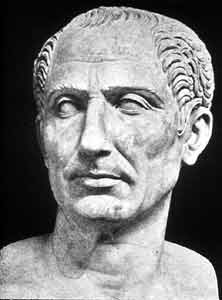
The Life of Julius Caesar


History of Julius Caesar, Biography, Pictures, Quotes

Beware the leader who bangs the drums of war in order to whip the citizenry into a patriotic fervor, for patriotism is indeed a double-edged sword. It both emboldens the blood, just as it narrows the mind. And when the drums of war have reached a fever pitch and the blood boils with hate and the mind has closed, the leader will have no need in seizing the rights of the citizenry. Rather, the citizenry, infused with fear and blinded by patriotism, will offer up all of their rights unto the leader and gladly so. How do I know? For this is what I have done. And I am Caesar. (Julius Caesar)

History / Biography of Julius Caesar
(100 – 44 BCE)

Gaius Julius Caesar was a Roman military and political leader. In 78 BCE Caesar began his political career in the Forum at Rome as an advocate, known for his oratory and ruthless prosecution of former governors notorious for extortion and corruption. Cicero once commented, "Does anyone have the ability to speak better than Caesar?" Aiming at rhetorical perfection, Caesar traveled to Rhodes in 75 BC for philosophical and oratorical studies with the famous teacher Apollonius Molo.

Cicero was instrumental in the transformation of the Roman Republic into the Roman Empire. His conquest of Gallia Comata extended the Roman world all the way to the Atlantic Ocean, introducing Roman influence into what has become modern France, an accomplishment of which direct consequences are visible to this day. In 55 BC Caesar launched the first Roman invasion of Britain. Caesar fought and won a civil war which left him undisputed master of the Roman world, and began extensive reforms of Roman society and government. He was proclaimed dictator for life, and heavily centralized the already faltering government of the weak Republic.

Caesar summoned the Senate to meet in the Theatrum Pompeium on the Ides of March 44 BC. As the Senate convened, Caesar was attacked and stabbed to death by a group of Senators who called themselves the Liberators. They justified their action on the grounds that they committed tyrannicide, not murder, and were preserving the Republic from Caesar's alleged monarchical ambitions. Ironically he fell at the feet of a statue of his greatest rival, Pompey the Great. His last words, generally thought to be those reported by Suetonius "You too, (my) son?" and Shakespeare's Et tu, Brute? ("And (even) you, Brutus?") are without ancient authority. The dramatic assassination on the Ides of March was the catalyst for a second set of civil wars, which marked the end of the Roman Republic and the beginning of the Roman Empire under Caesar's grand-nephew and adopted son Octavian, later known as Caesar Augustus.

Caesar's military campaigns are known in detail from his own written Commentaries (Commentarii), and many details of his life are recorded by later historians such as Suetonius, Plutarch, and Cassius Dio.

http://en.wikipedia.org/wiki/Julius_Caesar

Julius Caesar Quotes

Men willingly believe what they wish. (Julius Caesar, De Bello Gallico)

I love the name of honor, more than I fear death.

In war, events of importance are the result of trivial causes.

It is better to create than to learn! Creating is the essence of life.

As a rule, men worry more about what they can't see than about what they can.

If you must break the law, do it to seize power: in all other cases observe it.

It is easier to find men who will volunteer to die, than to find those who are willing to endure pain with patience. (Julius Caesar)

Read More

South Asia monsoon rains


Read More